37 articles
Essays & explainers
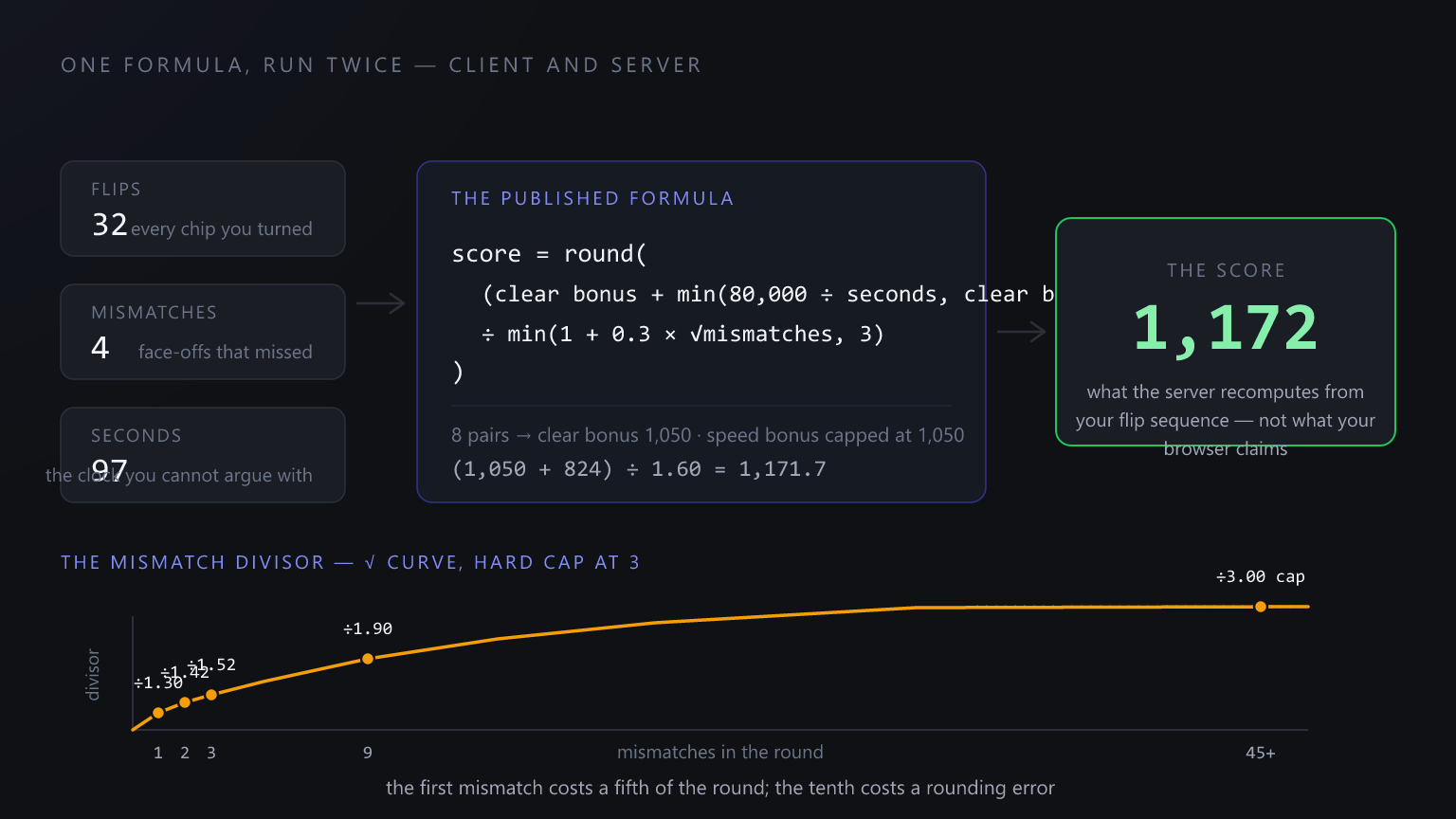
How We Score Everything (And Why Cheating Is Boring)
The full scoring model behind GetPlayJoy: difficulty constants, time decay, mistake penalties, server-side replay verification and percentile ranking.
The GetPlayJoy team · 9 min read
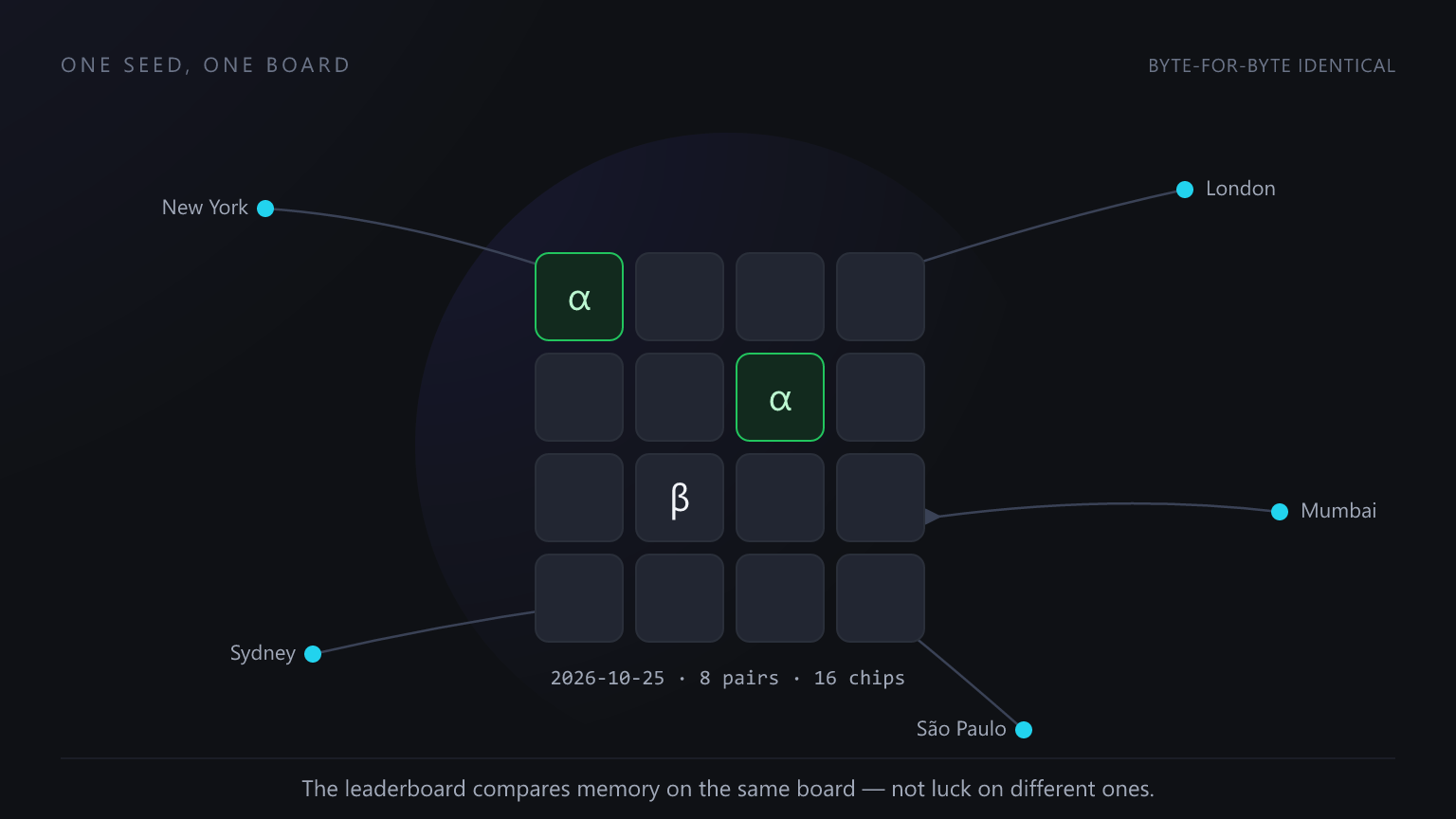
The Shared Daily Puzzle: Why Everyone Gets the Same Board (2026)
One puzzle for the whole planet, generated from the date. Here is why that single design choice carries the whole product.
The GetPlayJoy team · 6 min read
- story
Two Players, One Leaderboard: How a Shared Board Ranks the World
How GetPlayJoy is built and run by a small team: what we automated, what we deliberately did not, and what we learned shipping daily.
The GetPlayJoy team · 7 min read
- story
Daily vs NYT Games: Which Daily Puzzle Platform Wins in 2026?
A side-by-side of a no-signup daily puzzle site and the big subscription puzzle apps, and who each one is actually for.
Mara Whitfield · 8 min read
- story
Why "No Sign-Up" Is the Best Growth Trick in 2026
The unglamorous reason some puzzle sites grow faster than funded competitors: they never ask for an account.
The GetPlayJoy team · 6 min read
- story
Sudoku vs Nonogram: Which Trains Logical Reasoning Better?
Both are deduction games, but they exercise different muscles. We compared the data from our own players to see which one actually moves the logic axis.
Dr. Owen Brackley · 7 min read
- story
Why We Publish Exactly One Puzzle per Day
The design reasoning behind a single shared daily board: it creates a shared reference point, a streak worth keeping, and a leaderboard everyone trusts.
The GetPlayJoy team · 5 min read
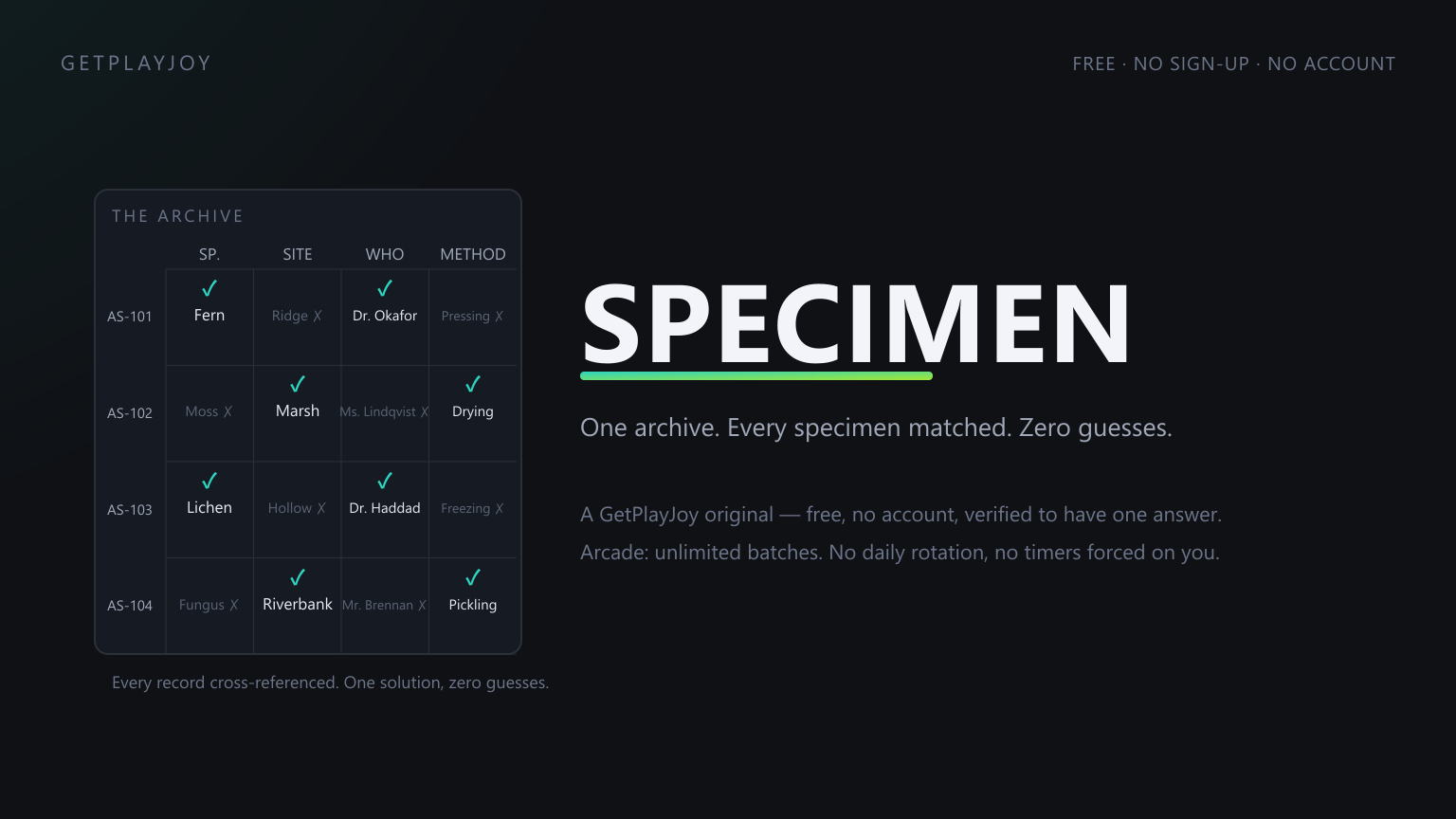
Every Specimen Batch, Explained: How the Archive Is Built (2026)
A Specimen batch is a generated logic-grid puzzle that a solver assembles, checks for a single solution, and only then releases. It is free to play on GetPlayJoy with no sign-up, and each batch is built on demand when you open a new one. This deep dive covers the generation loop, the unique-solution check, the 0–100 grade, and the record bank that pins the repeatable Preservation column.
Tomás Ferreira · 12 min read
How Specimen Scoring Works: From Seconds to Your Ability Profile
Specimen scores one batch with a single formula that mixes a clear bonus, an uncapped speed bonus, and a square-root mistake divisor. It is free to play on GetPlayJoy with no account, and the number you see is re-derived by the server, never taken from your client. This article walks through each term, shows a 5×5 next to a 4×4 and a 3×3, and explains what the two rated dimensions actually mean.
Dr. Owen Brackley · 12 min read
What Does \"Specimen\" Mean? The Name Behind the Archive Desk
"Specimen" is the product name GetPlayJoy gave its logic-grid puzzle, and it means a sample taken for study. The game is free to play with no sign-up, and the name points straight at the method: you inspect the records, you never guess. This piece covers the word's Latin root, the natural-history tradition it borrows, and why a name about looking fits a deduction puzzle.
Tomás Ferreira · 8 min read
Specimen vs Puzzle Baron: An Honest Comparison for 2026
Specimen and Puzzle Baron are both places to solve logic-grid puzzles, but they differ in how puzzles are made and how answers are checked. Specimen is free to play with no account and no sign-up, while Puzzle Baron is a long-established, respected archive you can use today. This comparison scores them across five dimensions and names where each one wins.
The GetPlayJoy team · 14 min read
The Best Logic Grid Puzzle Games in 2026
Specimen is a modern logic-grid puzzle where you match each specimen to its catalog number, species, site, collector, and preservation method using nothing but deduction. It is free to play on GetPlayJoy with no account, and every batch solves to exactly one answer. This list ranks the top logic-grid options of 2026 by fairness, access, and the quality of their solving path. For how Specimen builds its own verified batches, see [how the archive is built](/resources/stories/logicgrid-how-batches-built).
The GetPlayJoy team · 12 min read
The Best Brain Games for Logical Reasoning in 2026
Specimen is a logic-grid deduction game where you cross-reference specimen records until every attribute is matched, and it works as a clean workout for reasoned thinking. It is free on GetPlayJoy with no sign-up, and you can finish a board in a single short sitting. This list covers five brain games that train logical reasoning across different formats, not just one. The ranked field sits in our [best logic-grid games piece](/resources/stories/logicgrid-best-logic-grid).
Priya Nandakumar · 9 min read
A Short History of Logic Grid Puzzles: From Carroll to Einstein to Apps
Specimen is a modern logic-grid puzzle where you match specimens to their attributes by pure deduction. It is free on GetPlayJoy with no account, and its batches are generated and verified to a single solution. This piece traces that lineage from symbolic logic to the app stores, and it separates the documented record from the folklore.
Tomás Ferreira · 13 min read
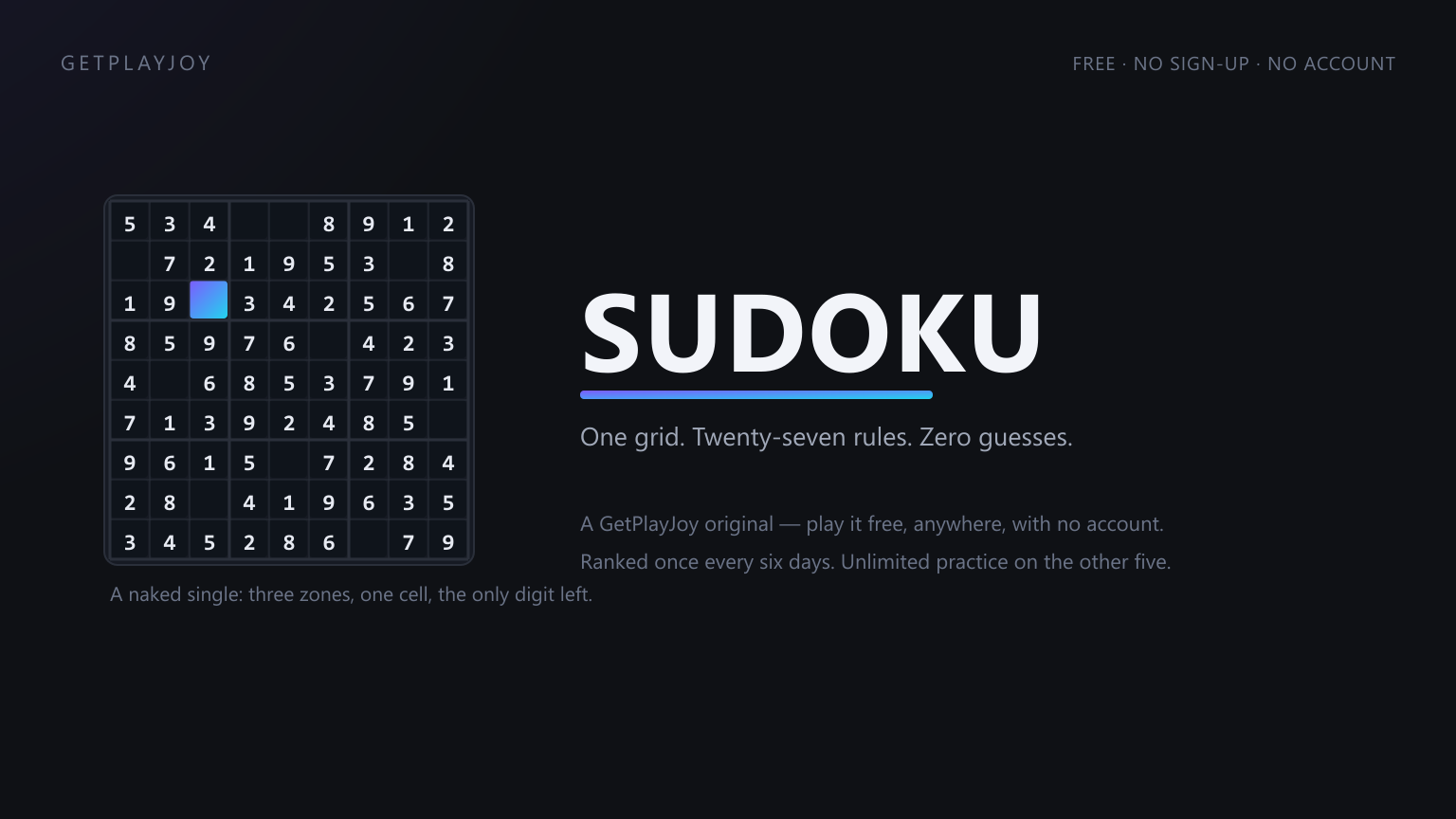
Sudoku vs Kakuro: Same Numbers, Different Logic (2026)
Is Kakuro just Sudoku with sums? No. Both use the digits 1 through 9 and both forbid repeats inside a unit, but the constraint that does the work is different, and that single difference changes the thinking from start to finish. This is a mechanics comparison: same symbol set, different logic.
Tomás Ferreira · 11 min read
The Best Sudoku Apps and Sites in 2026 (Free and Paid)
The daily-puzzle field narrowed after Wordle's boom pulled puzzle apps into the mainstream and the big publishers bought the popular ones. Sudoku did not vanish; it consolidated. Three shifts shaped the 2026 field: the New York Times acquisition set a quality bar everyone is measured against, app stores pushed subscription models, and a wave of no-account browser puzzles removed the sign-up tax entirely. Below is a ranked list built from a fixed set of criteria, with GetPlayJoy first and six real competitors after it. Delete our entry and the list still helps you choose.
The GetPlayJoy team · 16 min read
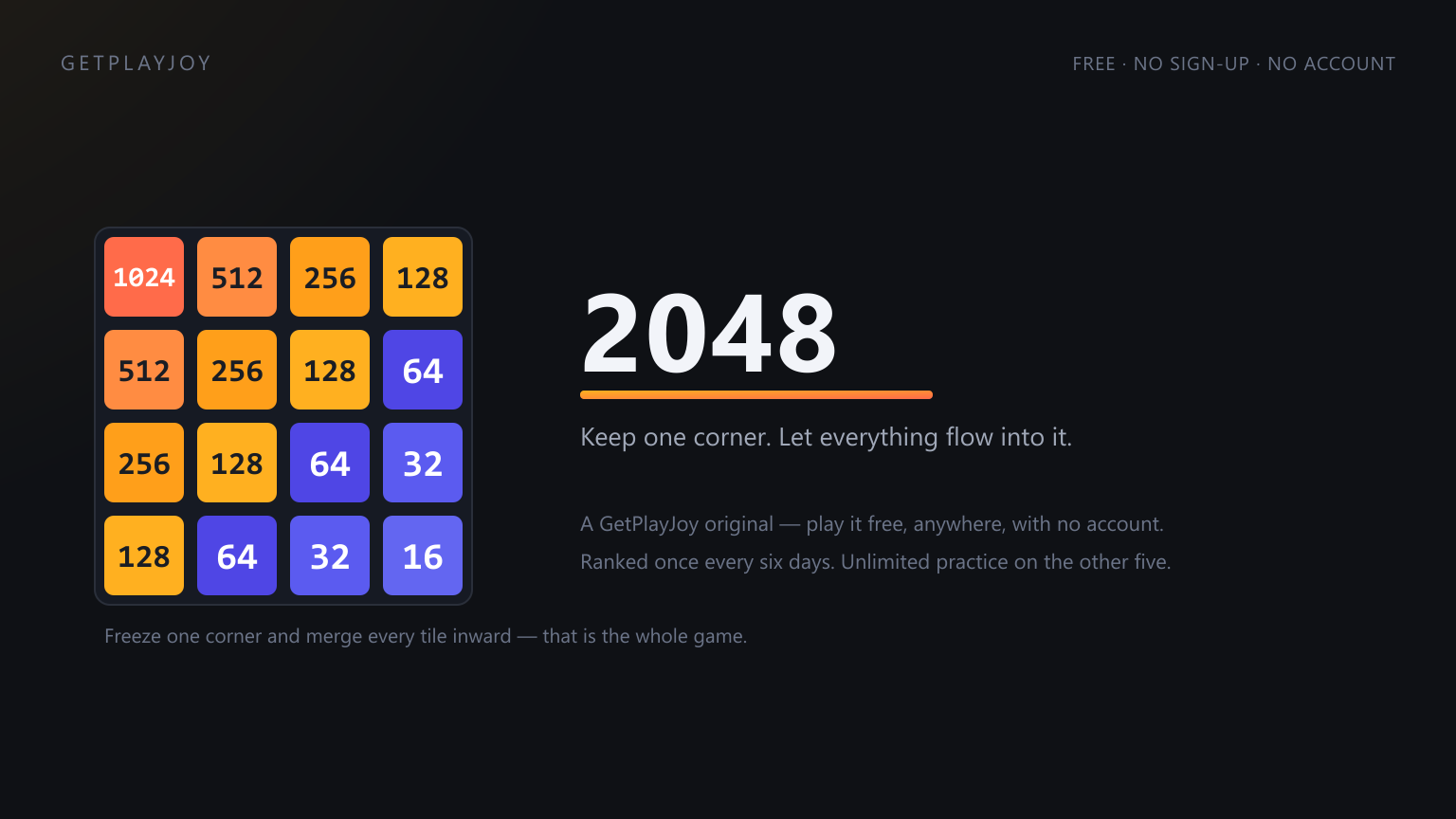
2048 vs Threes: The Clone That Overshadowed the Original
Is 2048 just Threes with the corners filed off? Not quite, though the borrowing is real and everyone involved has said so out loud. The short version: Threes shipped first, in February 2014, designed over fourteen months by three people who cared about every pixel; 2048 shipped five weeks later, built in a weekend, given away, and became the version the world actually played.
Tomás Ferreira · 10 min read
The Best 2048 Games and Clones in 2026 (Free and Paid)
Twelve years after a nineteen-year-old published a weekend project under an open licence, nobody agrees on what counts as the real 2048. Search the word and you get hundreds of results, most of them legal, several of them good, and a handful that exist mainly to collect advertising impressions from a name people still type.
The GetPlayJoy team · 13 min read
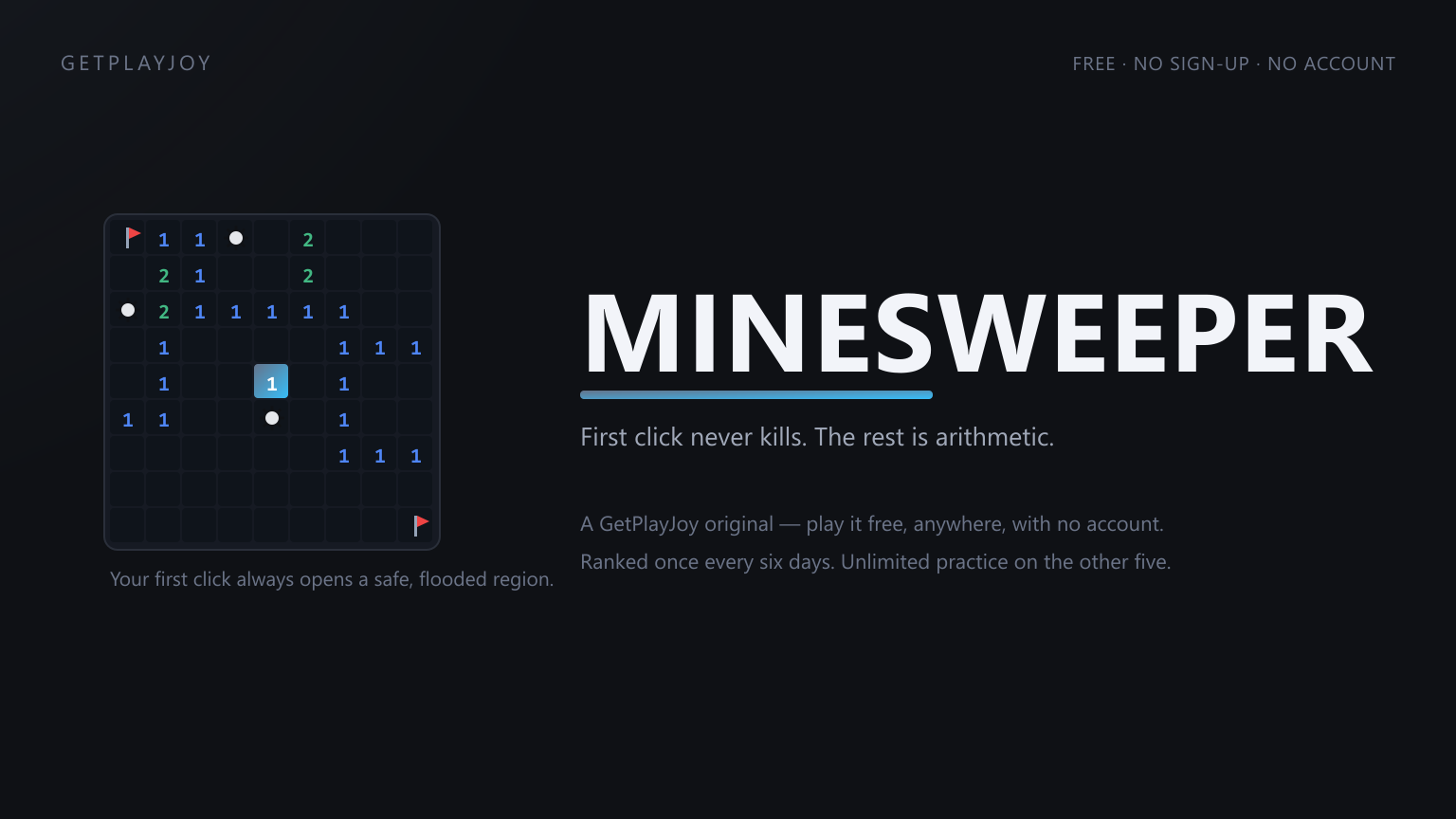
Minesweeper vs Google Minesweeper: Which Free Version Is Better in 2026
For five minutes and nothing else, Google's version wins and it is not close: type one word into a search box and a board appears without leaving the results page. For anything past five minutes, GetPlayJoy wins, because Minefield gives you today's board, everybody else's score on it, and a record that survives more than one session. Both are free with no sign-up and no download. This comparison goes through five dimensions, gives Google its genuine advantages in full, and says plainly where the two are doing different jobs.
Tomás Ferreira · 12 min read
The Best Minesweeper Games and Sites in 2026 (Free and Paid)
Microsoft stopped bundling Minesweeper with Windows in 2012, and thirteen years later there are more ways to play it than there were at the peak. Some are excellent, some are ad wrappers that quietly changed the Expert grid and never noticed, and one of them is ours. This list judges eight options against four criteria we state up front, including the versions nobody should feel obliged to pick, with the tradeoffs named for every entry.
The GetPlayJoy team · 15 min read
- story
Why We Built a Rotation Instead of One Game
A single puzzle gets stale in about three weeks. A rotation of games is what makes a daily habit survivable — and it makes the ability profile meaningful.
The GetPlayJoy team · 5 min read
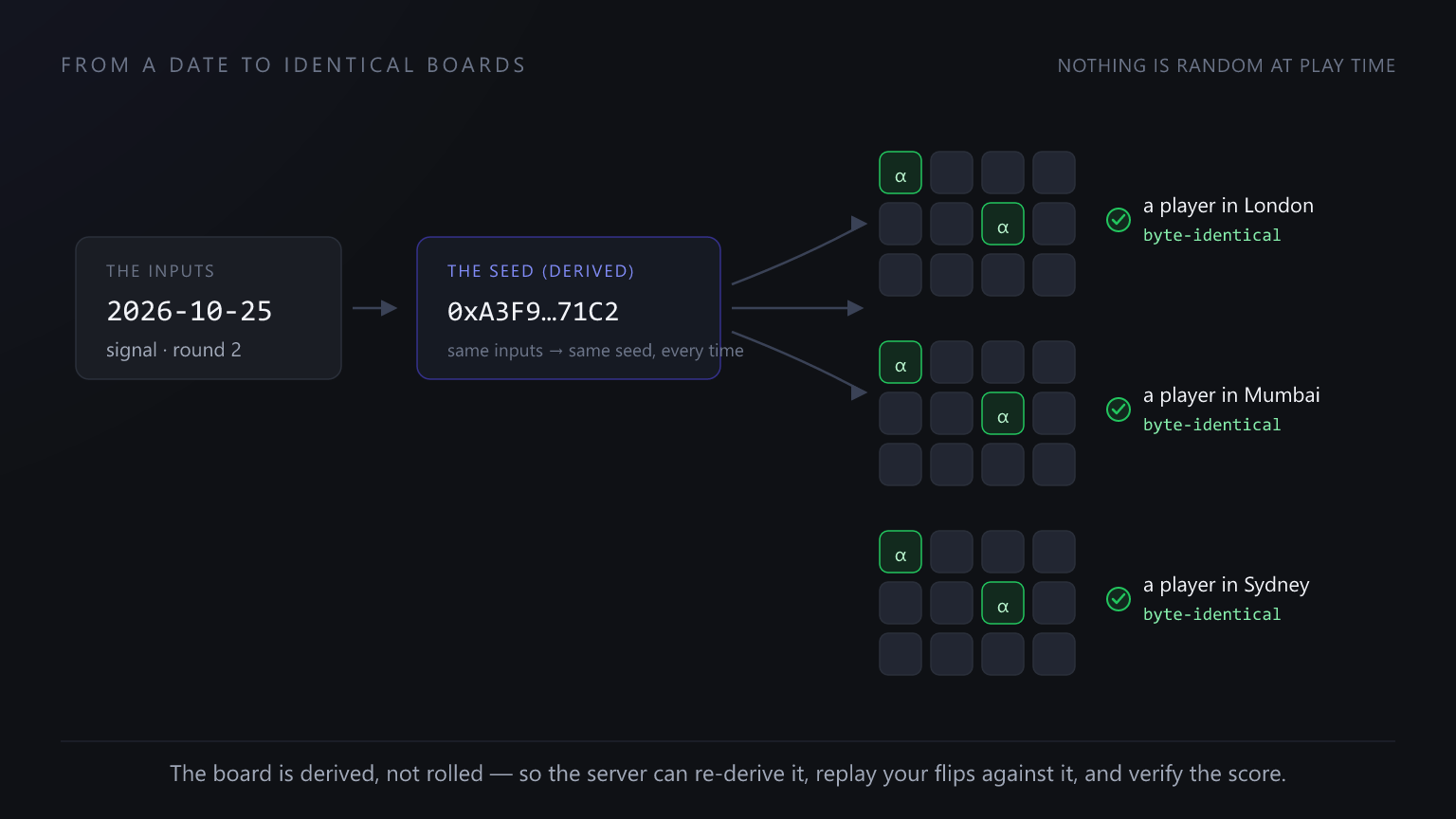
How Seeded Randomness Gives Everyone the Same Puzzle
Every player gets an identical board without us storing a single puzzle. Here is the trick, and what it means for fairness.
The GetPlayJoy team · 6 min read
- story
What a Fair Score Actually Looks Like
Speed, accuracy and difficulty all have to be in the same number. Here is the reasoning behind the formula, and the two things we refused to reward.
The GetPlayJoy team · 6 min read
- story
The History of Sudoku: From a Swiss Inventor to Your Daily Habit
From Latin squares to a Tokyo magazine to the world's newspapers — how a number-placement puzzle became a global habit.
Dr. Owen Brackley · 6 min read
- story
Nonograms: The Puzzle That Was Almost Lost
A picture puzzle invented twice, published in a magazine, and then largely forgotten until the internet found it again.
Dr. Owen Brackley · 5 min read
- story
Minesweeper's Journey: From a Windows Desktop to a Free Browser Tab
The most-installed game in history started as a teaching exercise. Here is how it got everywhere, and what changed when it moved online.
The GetPlayJoy team · 5 min read
- story
2048 and the Strange Pleasure of Sliding Tiles
A clone of a clone became one of the most-played games of the 2010s. Here is why the mechanic is so hard to put down.
The GetPlayJoy team · 5 min read
- story
What Wordle Got Right Was Not the Word Game
Word guessing games existed for decades. The thing that made Wordle a cultural event was the shared daily constraint.
The GetPlayJoy team · 6 min read
- story
Why We Do Not Sell Your Data
A puzzle site knows an unusual amount about you. Here is what we collect, what we do not, and why the business model works anyway.
The GetPlayJoy team · 5 min read
- story
How We Draw the Ability Radar
Six dimensions, nine games and a weighting table. Here is how a handful of scores becomes a shape, and what the shape does and does not mean.
Dr. Owen Brackley · 6 min read
- story
Ad-Supported or Subscription? We Decided to Do Both
The honest trade-offs of each model, and why a puzzle site is one of the few places where offering both is genuinely reasonable.
The GetPlayJoy team · 5 min read
- story
Daily Puzzle Habits That Actually Stick (2026)
Looking at which players are still here after two months, one pattern shows up over and over. It is not the one you would guess.
Dr. Owen Brackley · 5 min read
- story
What We Are Building in 2026: The GetPlayJoy Roadmap
Per-level history, friend comparisons, a proper mobile gesture pass and more archive depth. Here is what is on the list and what is deliberately not.
The GetPlayJoy team · 5 min read
- story
How We Handle Cheating, Honestly
We cannot stop a determined cheater on a browser puzzle game. Here is what we actually do, and where the limits are.
The GetPlayJoy team · 5 min read
- story
Behind the Scenes: How a Daily Puzzle Actually Ships
There is no editorial meeting. There is a rotation, a seed and a very small amount of code that decides what you play tomorrow.
The GetPlayJoy team · 4 min read
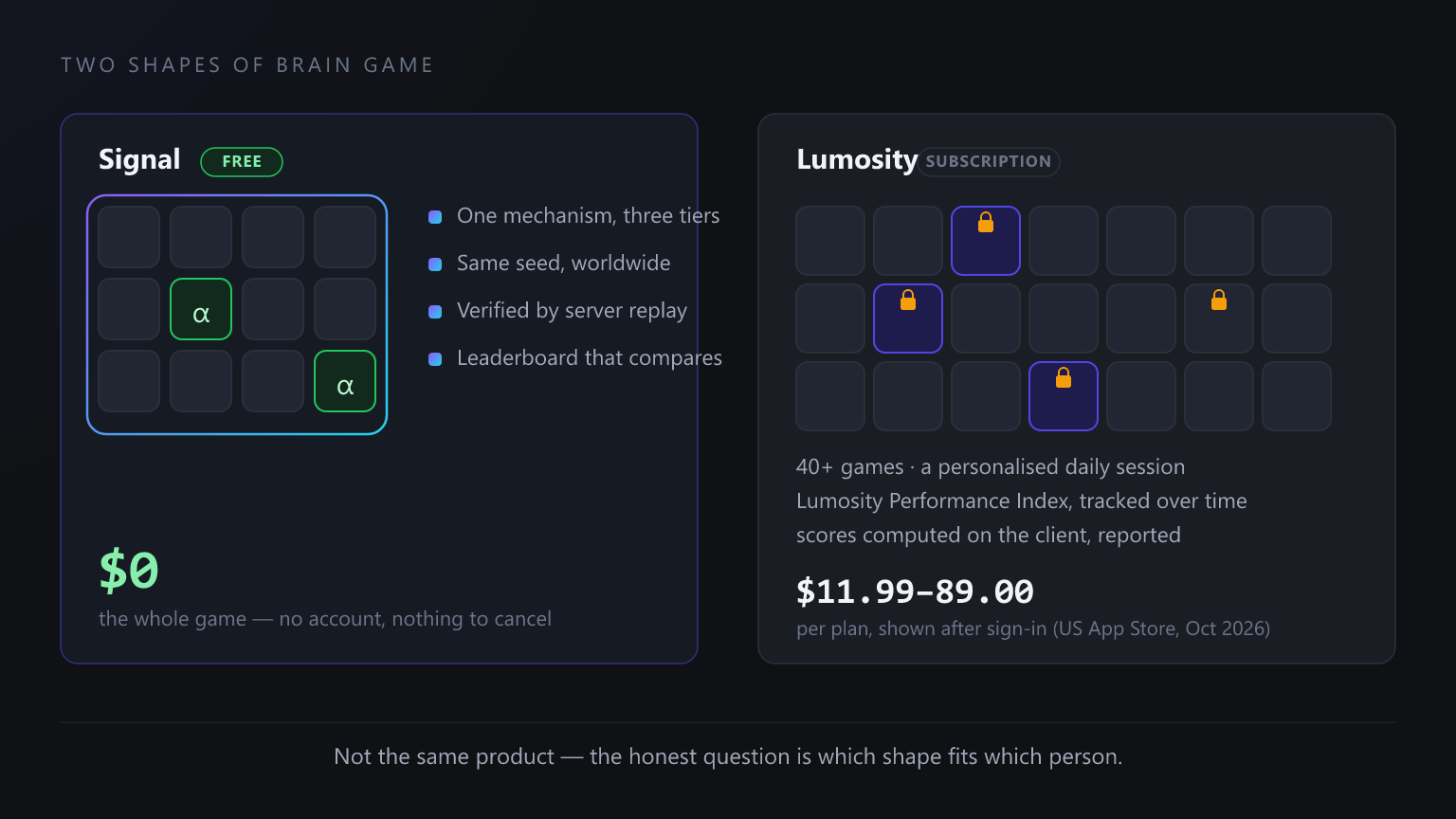
Signal vs Lumosity: A Free Memory Game Compared (2026)
Signal vs Lumosity, side by side: product model, game lineup, competition, tracking and pricing — including the things Lumosity genuinely does better.
Mara Whitfield · 10 min read
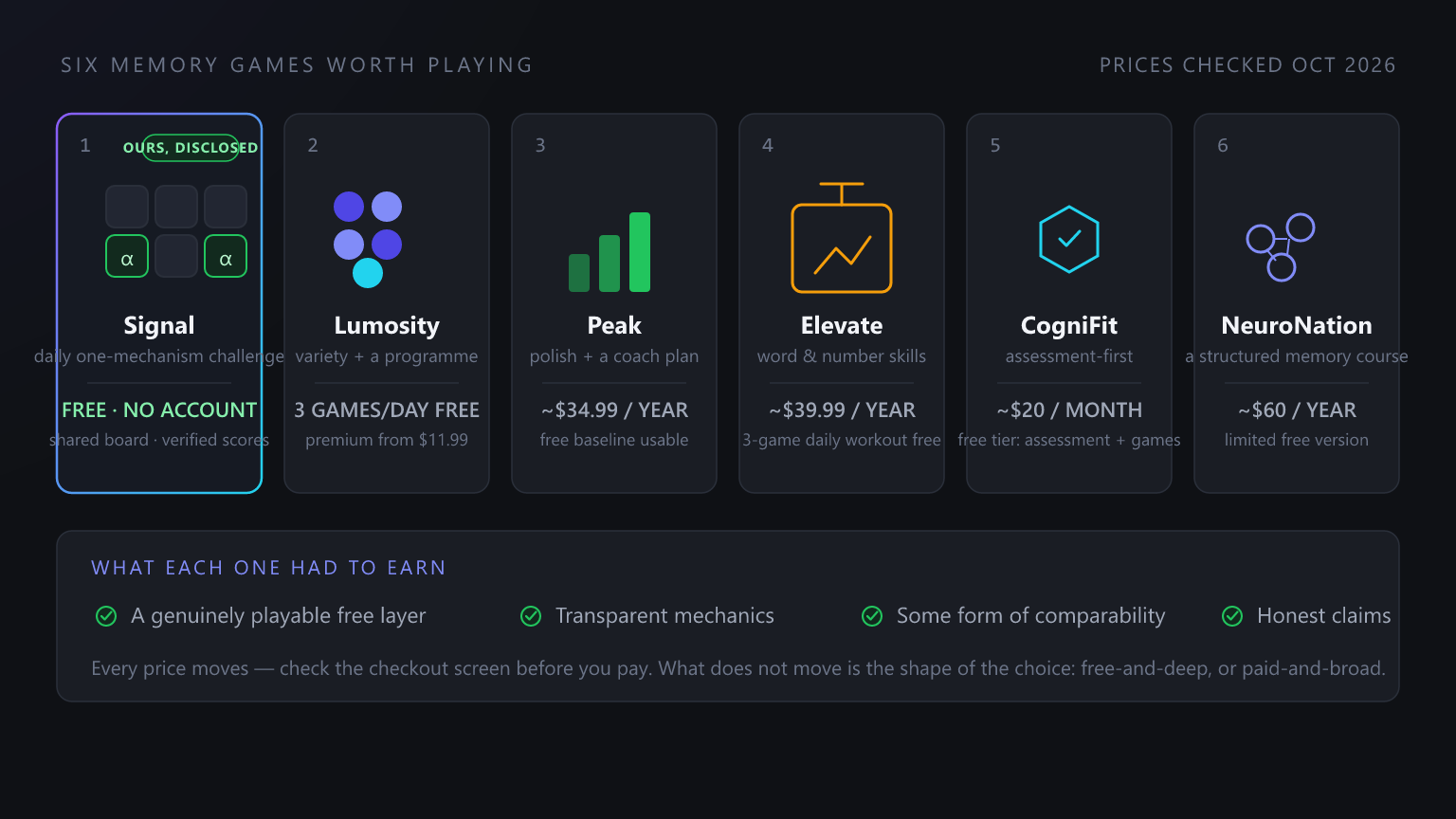
The Best Memory Games in 2026 (Including Free Alternatives to Lumosity)
Six memory games worth playing in 2026, including free alternatives to Lumosity — with the evaluation criteria stated up front and what to avoid stated plainly.
Mara Whitfield · 9 min read