12 articles
Brain science
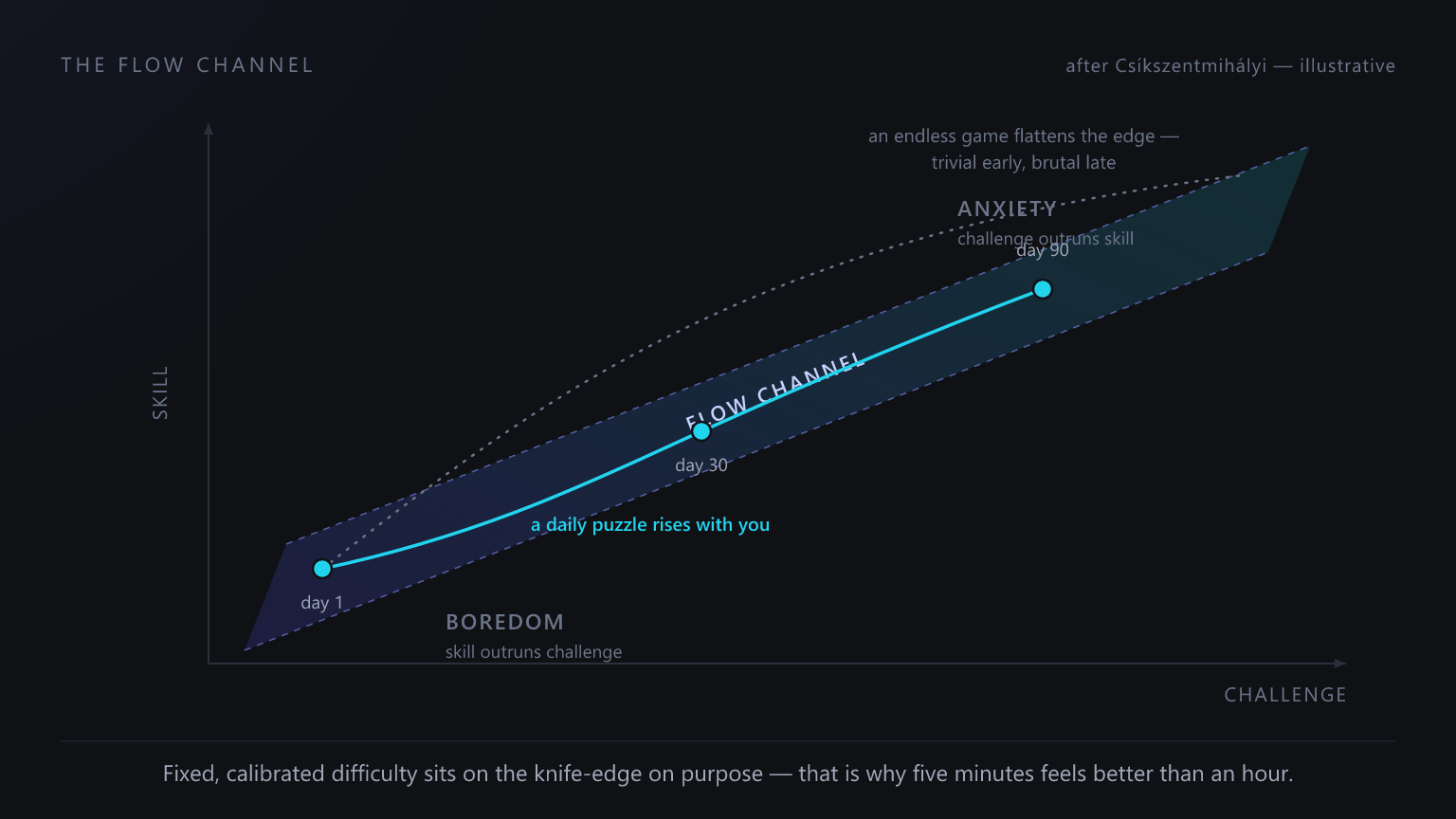
Flow State and Puzzle Games: Why Five Minutes a Day Feels Good
The psychology of "flow" explains why a short daily puzzle is more satisfying than an endless session. A look at the research.
Dr. Owen Brackley · 8 min read
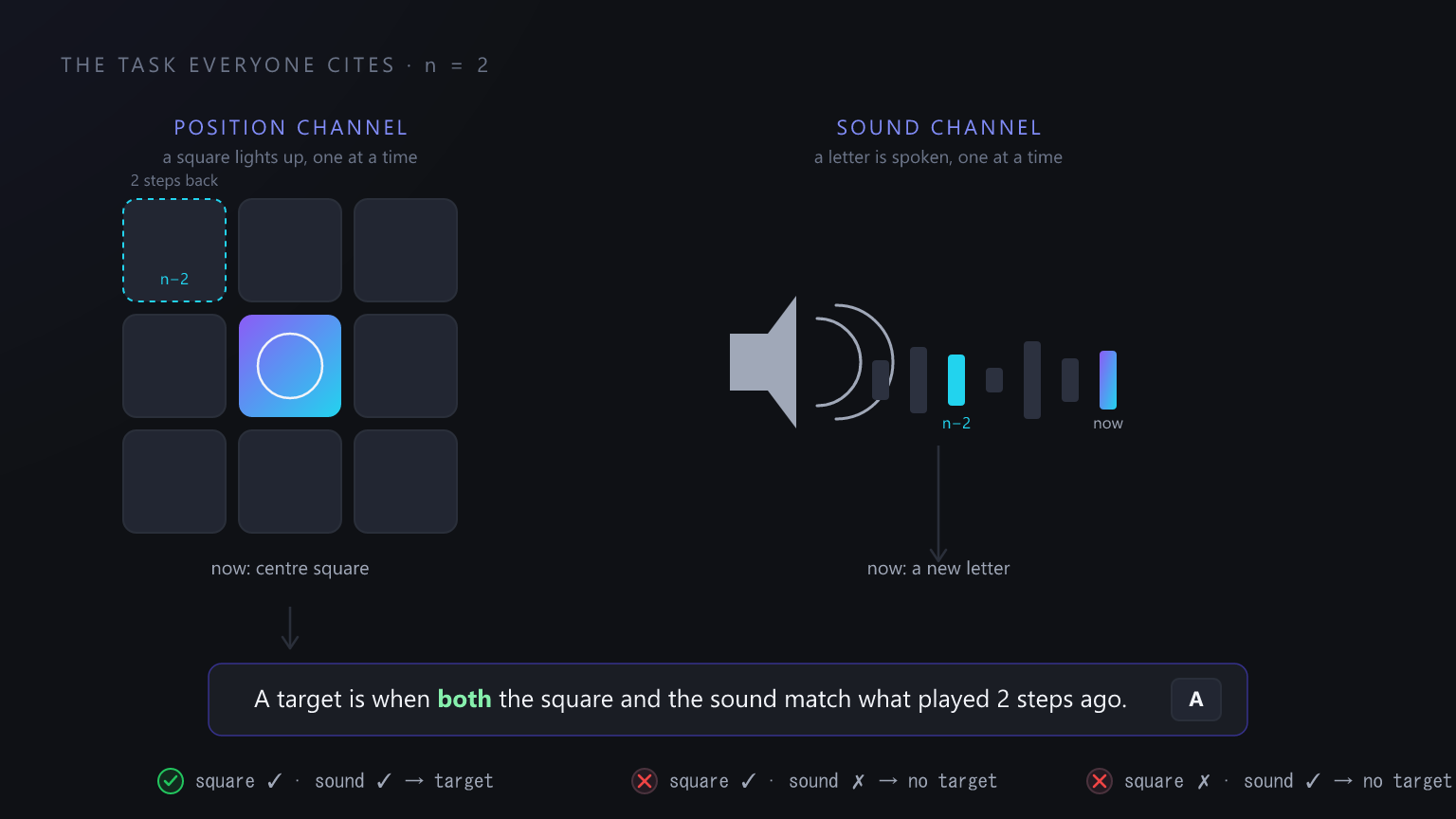
What Dual N-Back Research Actually Says About Working Memory
The famous working-memory study, what it did and did not prove, and what a daily puzzle player should take from it.
Dr. Owen Brackley · 9 min read
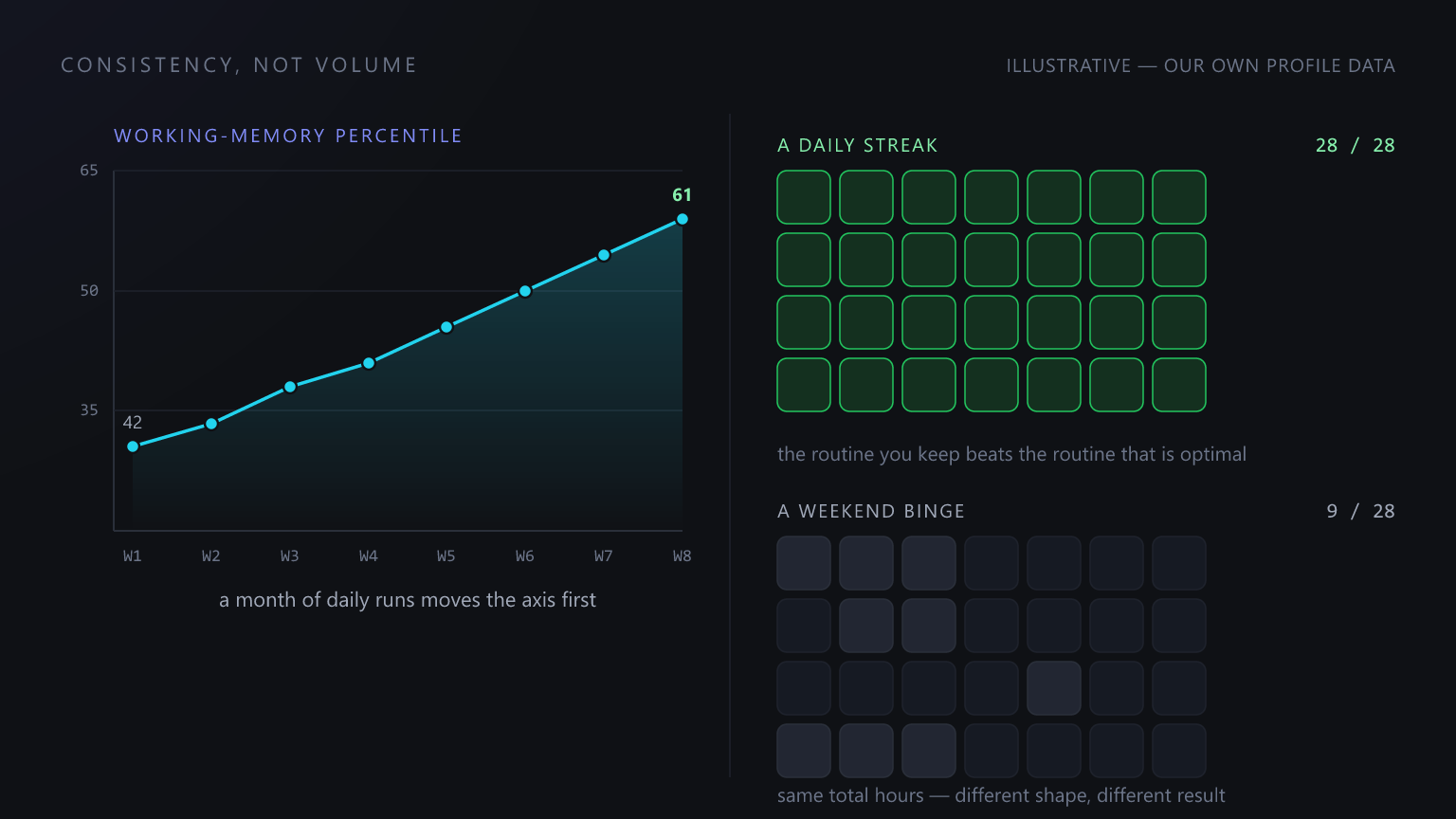
What Solving a Puzzle Every Day Does to Your Working Memory
A short, evidence-based look at why a daily puzzle habit shows up in the working-memory axis of your ability radar — and what the research actually supports.
Dr. Owen Brackley · 6 min read
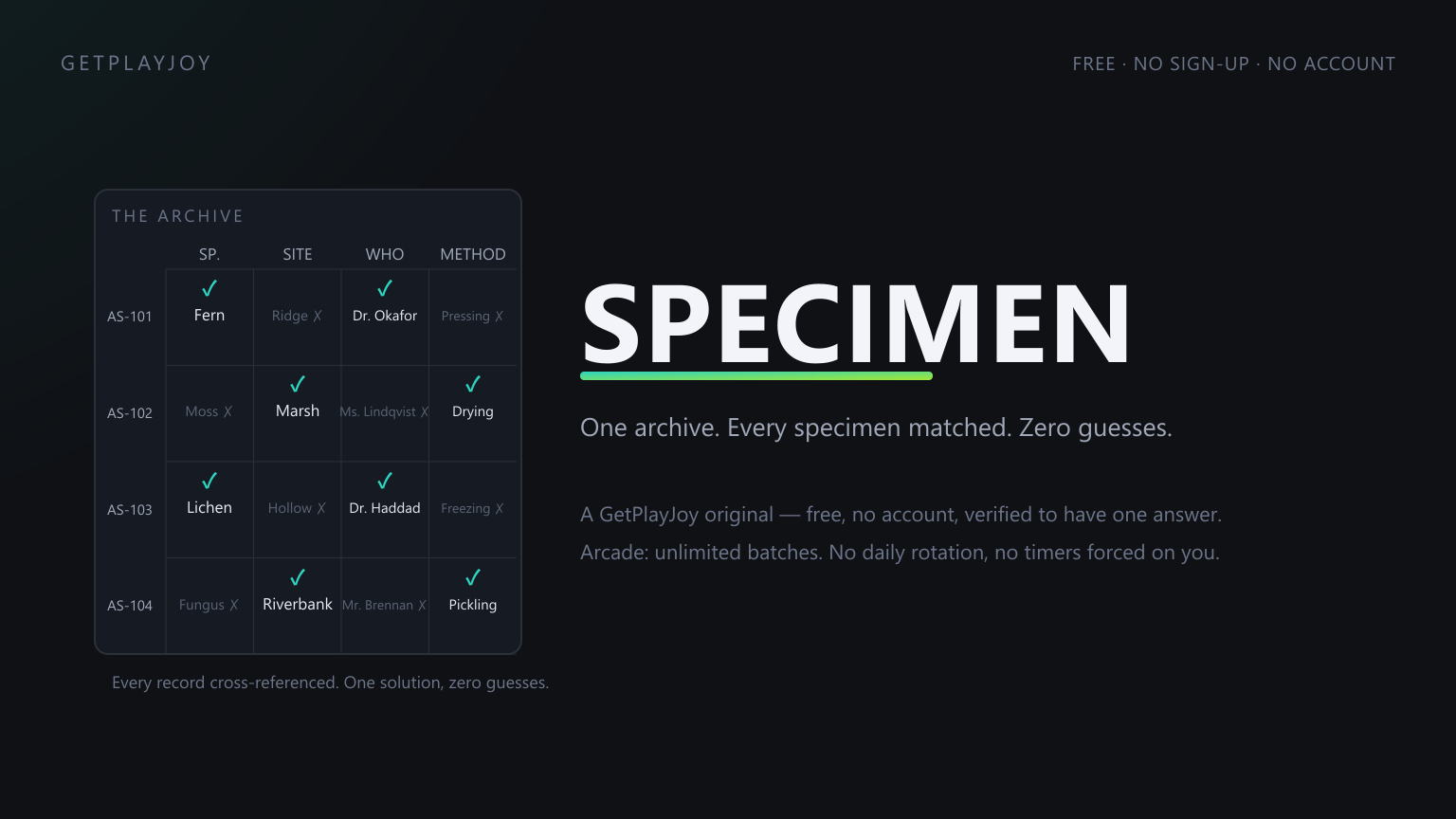
Deductive Reasoning, Explained: What a Logic Grid Actually Trains
The honest answer is that a logic grid trains one specific reasoning skill, not your intelligence. It is free to play on GetPlayJoy with no sign-up and no account, so you can test that claim in a few minutes. This piece defines deduction, maps a grid onto formal constraint solving, and states plainly what the practice changes and what it does not.
Dr. Owen Brackley · 13 min read
Does Brain-Training Transfer? What the Research Says in 2026
Near transfer works; far transfer is weak or absent. Specimen is free to play on GetPlayJoy with no account and no sign-up, so you can test the narrow-skill claim yourself. This article walks the four studies that set the boundary between practising a task and improving your mind broadly.
Dr. Owen Brackley · 13 min read
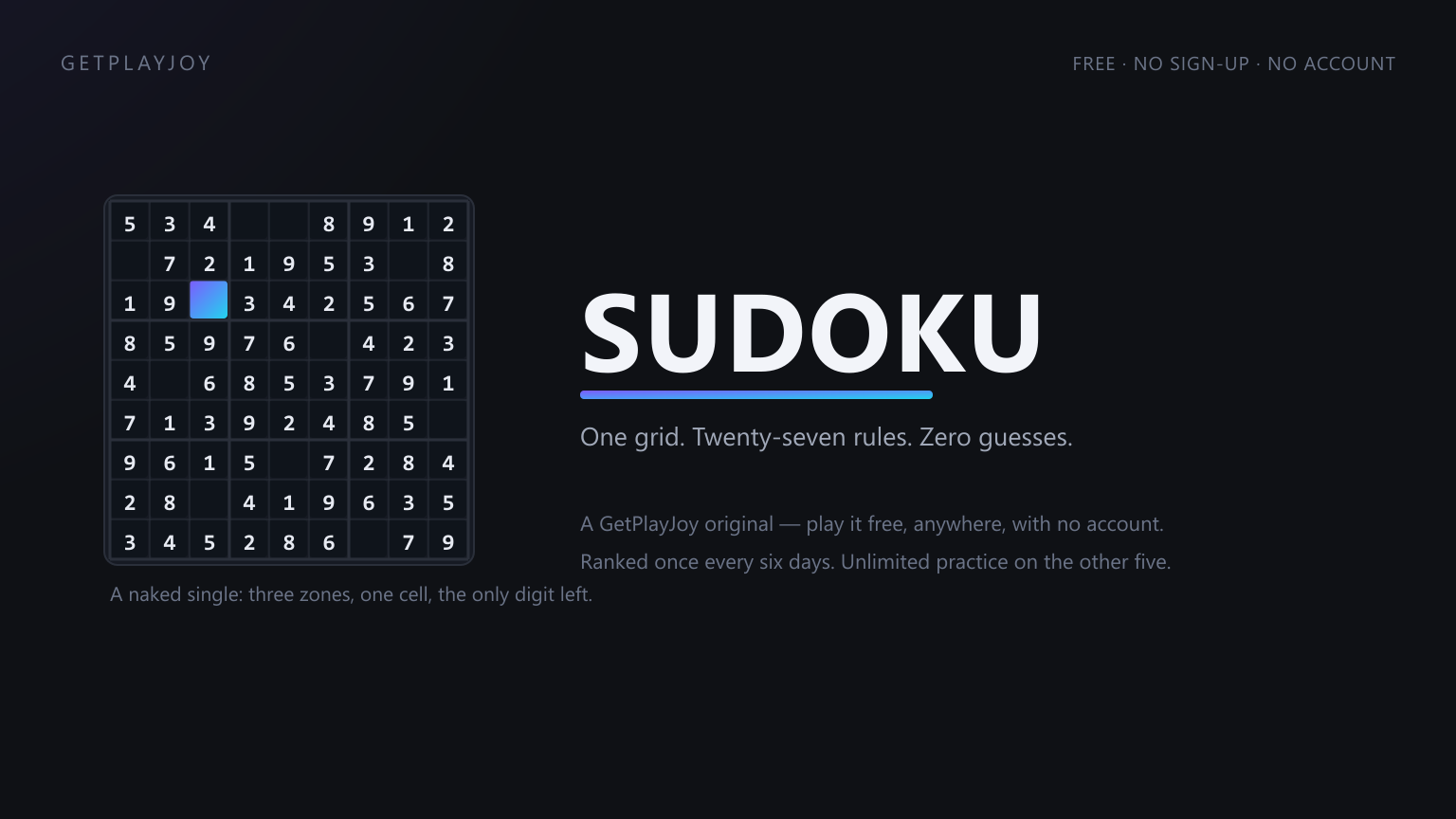
Does Sudoku Train Your Brain? What the Research Actually Says in 2026
The honest answer is: partly. Sudoku builds specific mental habits — chiefly working memory and logical deduction — and the lab evidence says those gains stay close to the task. It is real exercise, not a cure, and the large studies are unusually clear about the limit.
Dr. Owen Brackley · 10 min read
The Psychology of Sudoku: Why a 9×9 Grid Keeps You Coming Back
You know the moment. The grid is nearly full, one box will not resolve, and your thumb hovers over Reveal. Or worse: you open the app at 11:58 p.m. because the day is about to flip and the streak is at 41. The pull is real, and most of it is predictable from a century of psychology.
Dr. Owen Brackley · 9 min read
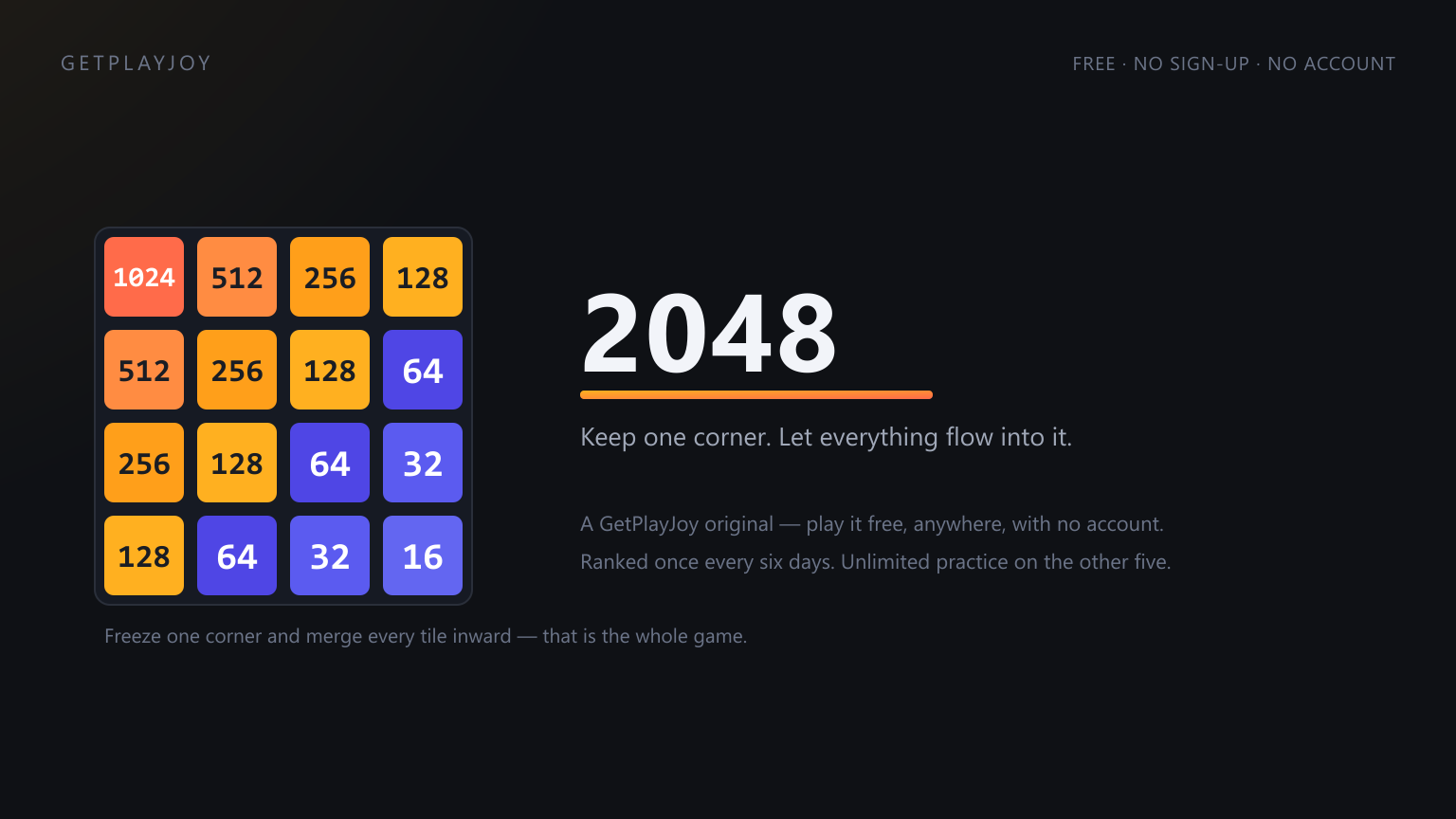
Does 2048 Train Your Brain? What the Research Actually Says in 2026
The honest answer is: partly. Playing 2048 makes you measurably better at 2048 and at tasks that share its shape, and there is no good evidence it makes you smarter in general. You can test the claim for free on the [2048 game page](/games/2048), no sign-up, and judge the improvement yourself.
Dr. Owen Brackley · 9 min read
The Psychology of 2048: Why 2+2=4 Is So Addictive
It is eleven at night and the board you have spent nine minutes arranging has one merge left in it. You know it will not work. You press left anyway, lose the corner, and start another board, because restarting takes two seconds and nothing else you could do tonight offers the same deal.
Dr. Owen Brackley · 9 min read
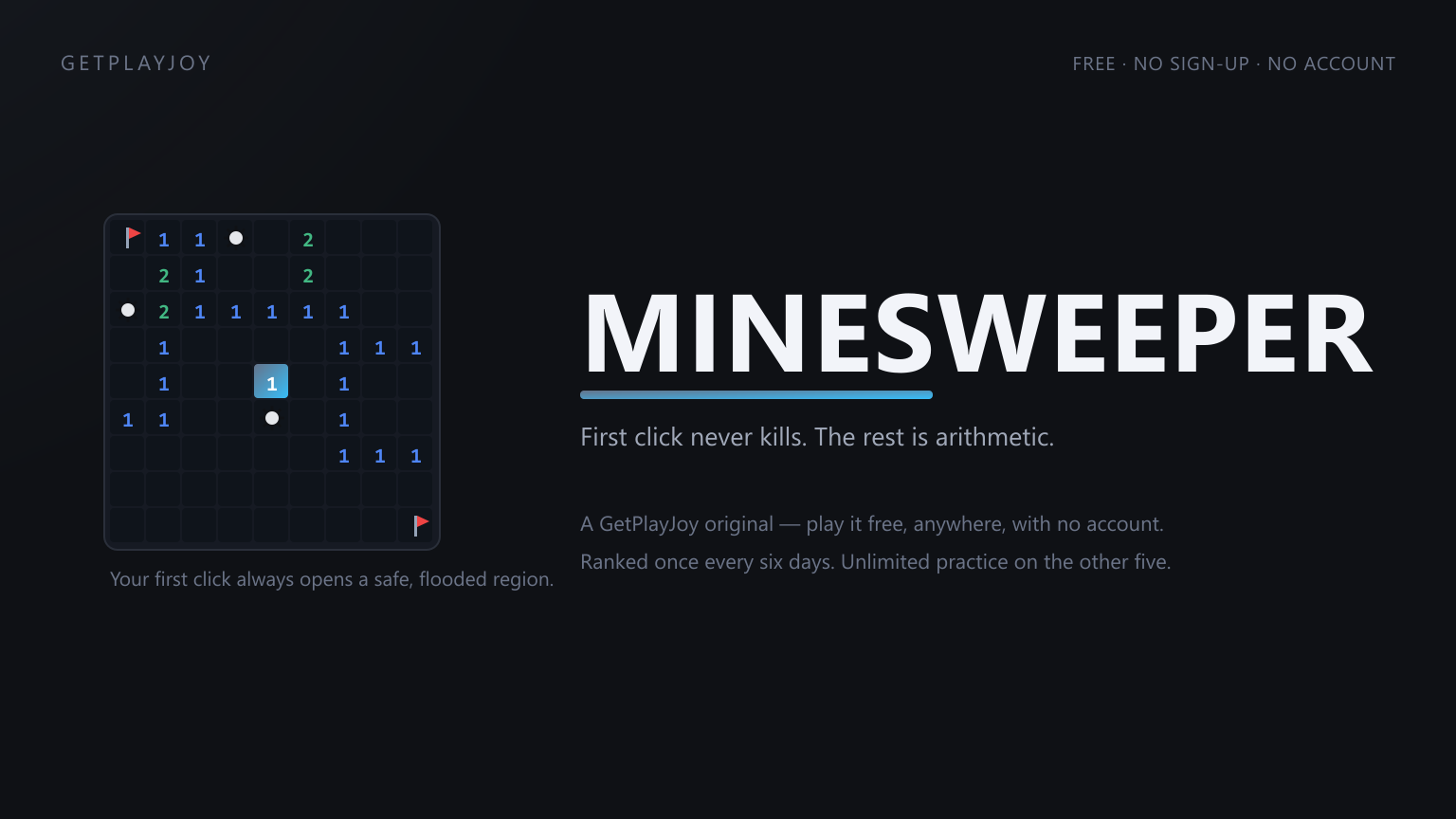
Does Minesweeper Train Your Brain? What the Research Actually Says in 2026
The honest answer is: partly, and less than the marketing for brain games has ever claimed. Minesweeper builds two things with real evidence behind them, the habit of holding several constraints in mind at once and the habit of drawing the conclusion those constraints force, and it improves at both of those things very well. It does not raise general intelligence, does not protect against dementia, and is not a clinical assessment of anything. Everything below is the evidence for each half of that sentence.
Dr. Owen Brackley · 9 min read
The Psychology of Minesweeper: Why a 9×9 Field Keeps You Clicking
It happens near the end of a board. Three covered tiles left, two mines somewhere among them, and no number anywhere that distinguishes them. You hover. You know it is a coin flip. You click, lose, look at revealed mine you could not have deduced, and do the strangest thing available to you: open another board. The game is free on GetPlayJoy with no sign-up, which means nothing is stopping you either. This piece is about the machinery behind that reflex, what it is good for, and the one part of it that will always be luck.
Dr. Owen Brackley · 9 min read
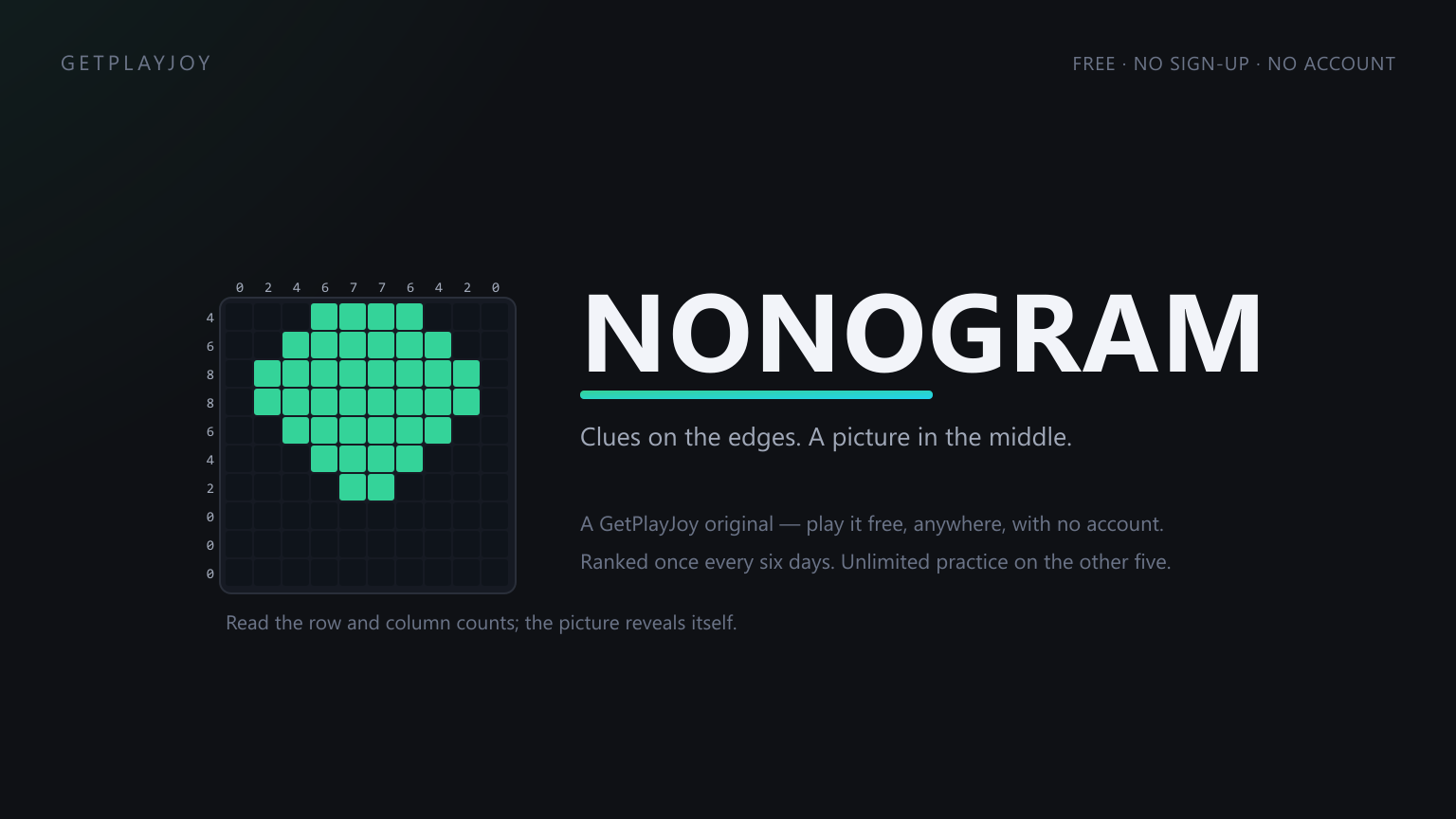
Does Solving Nonograms Train Your Brain? What the Research Actually Says in 2026
The honest answer is partly, and only for a narrow set of skills. Solving nonograms exercises logical deduction and spatial scanning, and you will get better at those specific things the more you play. Whether that improvement spills over into memory, attention, or anything you do away from the grid is a different question, and the large studies say the spillover is small at best. This piece is free to read and the [Nonogram game page](/games/nonogram) it describes is free to play with no sign-up; it covers what nonograms train, what the big trials found, and where the line between a fun workout and a cognitive cure actually falls.
Dr. Owen Brackley · 10 min read